Florida Business Interruption Insurance for Small Businesses
Florida business interruption insurance: why small businesses can't afford to skip it
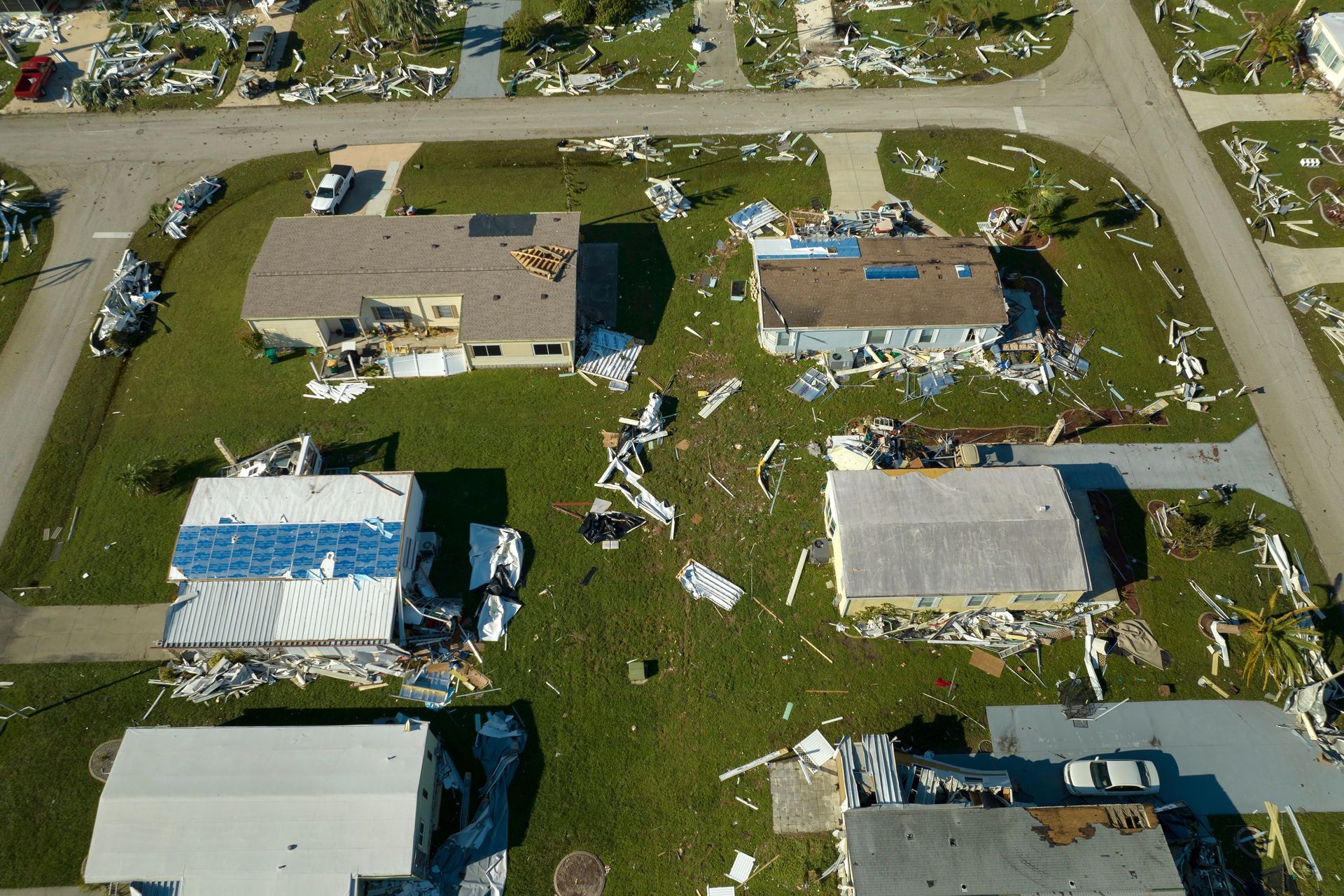
Florida business interruption insurance is one of the most overlooked coverages a small business owner can carry, and the oversight tends to show up at the worst possible moment. A hurricane makes landfall. A burst pipe floods your retail floor. A fire forces you to close for eight weeks. Your commercial property insurance covers the physical damage, but who replaces the revenue you're not collecting while the doors are shut? That's the gap business interruption coverage is designed to fill.
What business interruption insurance actually covers
Business interruption insurance (also called business income insurance) replaces the revenue your business would have earned during a covered shutdown. It also picks up certain ongoing expenses that don't stop just because you do. Think of it as a financial bridge between the moment disaster strikes and the day you're back to normal operations.
A standard policy typically covers:
- Lost net income: the profit you would have earned based on prior financial records, calculated for the period the business is closed.
- Fixed operating expenses: rent or mortgage payments, utility bills, and loan payments that continue whether you're open or not.
- Employee wages: so you can keep your team on payroll and avoid losing trained staff during a long closure.
- Temporary relocation costs: if you can operate from a temporary location, the extra expense to do so may be covered.
- Extra expenses to reopen faster: some policies cover costs to speed up the recovery, which benefits both you and the insurer.
It's worth knowing what the coverage does not include: damage to physical property (that's your commercial property insurance), losses from a non-covered peril (such as a flood when you don't have separate flood coverage), and losses that occur after the restoration period ends.
Why Florida raises the stakes for small businesses
The state's geography and weather create risks that simply don't exist in most other states. If you're running a shop in Boca Raton, a restaurant in Tampa, or a service business in Orlando, a single storm season can produce multiple major disruptions.
- Hurricane season runs June through November. That's six months every year when a named storm could force a mandatory evacuation order, flood your building, or knock out power for days or weeks. FEMA data shows that nearly 40 percent of small businesses that close after a disaster never reopen.
- Flooding is a separate event, not automatic coverage. Standard business interruption policies attach to the underlying property policy's covered perils. If your property isn't covered for flood damage, your business interruption policy won't trigger on a flood claim. Florida businesses in or near flood zones need to address this separately with commercial flood insurance.
- Supply chain disruptions are common after major storms. Even if your building is fine, your suppliers may be shut down, your customers may have evacuated, and access to your property may be restricted. Some policies offer "civil authority" extensions that cover losses when a government order prevents access to your premises.
- Power outages cause spoilage losses. For food service and retail businesses with perishable inventory, extended outages translate directly into losses that add up fast.
The SBA has estimated that small businesses without an adequate recovery plan or income replacement coverage typically exhaust their reserves within 30 to 60 days of a major closure. For many Florida small businesses, that's the difference between reopening and closing for good.
The restoration period: the detail most business owners miss
One of the most important concepts in any business interruption policy is the restoration period . This is the window of time during which the policy will pay covered losses. It generally begins after a short waiting period (often 72 hours after the triggering event) and ends when the damaged property has been repaired or replaced with reasonable speed and care.
The length of the restoration period matters considerably in Florida. After Hurricane Ian in 2022, some businesses in Fort Myers and surrounding areas waited four to six months for contractors to complete repairs. Supply chain backlogs for construction materials stretched timelines even further. A policy with a 12-month restoration period may not be enough for a business that suffers severe structural damage.
When you're shopping for coverage, ask your agent specifically:
- What is the maximum restoration period? Twelve months is common, but 18 or 24 months is available and often worth the additional premium for a brick-and-mortar business.
- Does the policy include an extended period of indemnity? This extension covers the period after repairs are complete but before revenue returns to pre-loss levels. Customers don't always come back the day you reopen.
- Is there a waiting period before coverage begins? The 72-hour standard waiting period is built into most policies. Some policies offer a shorter deductible period for an additional premium.
How coverage amounts are calculated (and why underinsurance is a real risk)
Business interruption coverage is not bought by the square foot the way commercial property coverage is. It's calculated based on your business's actual financial performance, typically using 12 months of prior revenue and expense records. The insurer and your agent will project the "business income" figure, which is gross revenue minus the operating expenses that would stop during a closure.
The danger is underinsurance. If your business has grown significantly in the past year, or if you use outdated financials to set the coverage limit, you may collect far less than you need when a claim happens. A restaurant generating $800,000 in annual revenue that closes for four months should theoretically be entitled to roughly $267,000 in lost income before expenses are factored in. If the policy limit was set based on slower revenues from three years ago, the payout could fall tens of thousands of dollars short.
The practical approach is to review your business interruption limits every year, especially if your revenue has grown, you've added staff, or your fixed expenses have increased. This is also one of the reasons working with an independent agent pays off: a good agent will prompt this review and compare multiple carriers to find the right limit at a competitive price.
For a broader look at how Florida business income coverage fits into a complete commercial package, see the Florida business interruption insurance guide on this site.
Business interruption vs. a business owner's policy: what's the difference?
Many small businesses in Florida are insured under a Business Owner's Policy (BOP) , which bundles commercial property coverage, general liability, and often business interruption coverage into one package. A BOP is designed for small to mid-sized businesses and is generally more affordable than buying each coverage separately.
If your business qualifies for a BOP, it can be an efficient way to get business interruption coverage without buying a standalone policy. However, BOP eligibility has limits: businesses with very high revenues, significant property values, or certain higher-risk operations (contractors, manufacturers, some hospitality businesses) may need a more customized commercial package instead.
The question to ask is not whether a BOP covers business interruption (most do, in some form) but whether the limits and restoration period within the BOP are adequate for your actual exposure. A BOP with a $50,000 business income sublimit is very different from a standalone policy with a $300,000 annual limit and an 18-month restoration period . You want to know exactly what you're getting before a claim happens, not after.
If you're also evaluating general liability limits, the post on why your business needs more than general liability walks through the other coverage gaps that small business owners commonly discover too late.
Industries in Florida that carry the highest closure risk
Virtually every small business in Florida can benefit from business interruption coverage, but some industries face substantially higher closure risk and should treat this coverage as non-negotiable.
- Restaurants and food service: a kitchen fire, a health department closure order, or a storm-related power outage can shut down operations within hours. Revenue loss accumulates immediately, and fixed costs (rent, staff) do not pause.
- Retail shops: hurricane damage, flooding, or a broken water main can force a weeks-long closure. Seasonal retailers near the coast risk losing their entire peak season.
- Medical and dental offices: practices that can't see patients due to building damage face not only lost income but potential patient attrition if appointments go unmet for weeks.
- Construction and contracting: while contractors may see increased demand after a storm, a business that is itself damaged (equipment loss, office damage) may be unable to bid or perform work during recovery.
- Hospitality and short-term rentals: coastal hospitality businesses can lose an entire season's revenue from a single major hurricane event.
- Professional services firms: law offices, accounting firms, and consulting businesses that depend on a single office location can be completely disrupted by a prolonged closure.
What a claim looks like in practice
Understanding how a business interruption claim works before you file one can save significant time and stress. Here is a simplified version of the process:
- The triggering event occurs. Fire, wind damage, water damage, or another covered peril damages your property and forces a closure. The peril must be one covered under your property policy.
- You notify your insurer promptly. Delayed notification can complicate or reduce a claim. Report the loss as soon as possible.
- Documentation begins immediately. You will need financial records (bank statements, tax returns, profit-and-loss statements, payroll records) to support the income calculation. The more organized your records, the smoother the process.
- The adjuster calculates lost income. The insurer will compare your historical financials to project what you would have earned during the closure period.
- Payments are issued during the restoration period. Depending on the policy, you may receive periodic payments while you're still closed rather than waiting for a lump sum after reopening.
Good recordkeeping before a loss is one of the most practical things a small business owner can do. Keeping digital copies of financial records offsite or in cloud storage means you can access them even if your physical office is damaged.
Get coverage that matches the real risk your Florida business faces
The Gordon Agency is an independent insurance agency serving small businesses throughout Florida, including Boca Raton, Tampa, Orlando, Fort Myers, and beyond. Because we work with multiple carriers, we compare options on your behalf and match you with coverage that fits the way your business operates, not just a generic policy that checks a box.
Florida's storm exposure is real, and the financial consequences of an uninsured closure can be permanent. If you haven't reviewed your business interruption limits recently, or if you're not sure whether your current policy covers the scenarios that concern you, now is a good time to take a closer look.
Call us at (561) 988-3330 or request a commercial insurance quote online. We'll review your current coverage, identify any gaps, and help you make sure your business can survive whatever Florida's weather throws at it.
Get A Quote
At The Gordon Agency, securing your future is easy. Ready to protect what matters? Contact us for a quick quote and personalized insurance options!
Kelly
Speak to Kelly 24/7
Microphone ready
Start your custom insurance quote
Instant answers to your insurance questions
Schedule appointments or follow-ups
Personal Insurance
From auto and homeowners to renters and umbrella policies, we help protect your family and property. Let’s find coverage that fits your life.
Commercial Insurance
We customize policies for your industry's risks, like general liability and workers' comp, ensuring you can run your business worry-free.
Contact The Gordon Agency
Recent Posts